


The Weird and wonderful world of the Fatberg!
03/07/2019
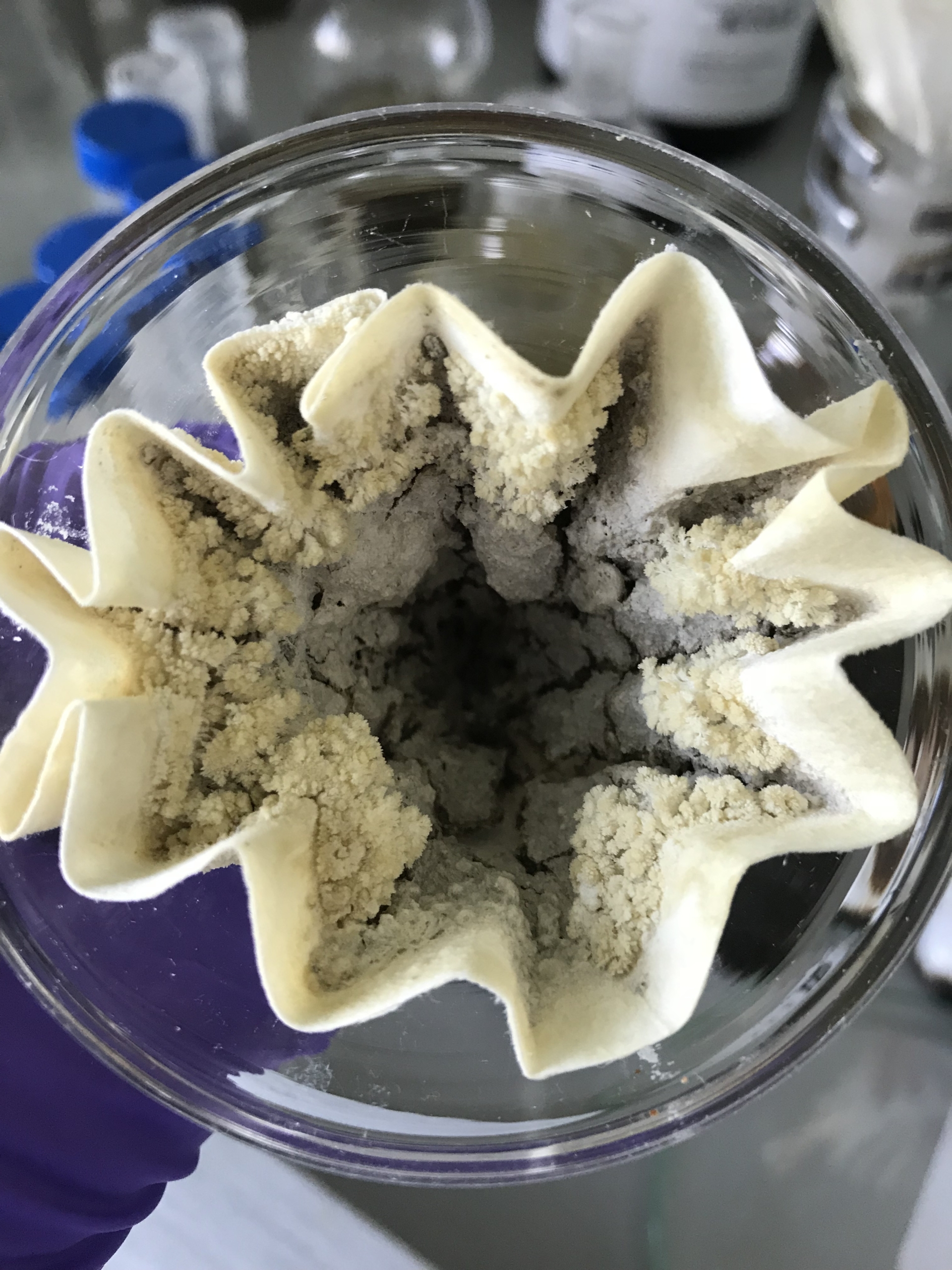
I joined Cranfield Water department in September 2017, where I am pursuing my EngD as one of the STREAMers. STREAM is the Industrial Doctoral Centre (IDC) for the Water Sector funded by the Engineering and Physical Sciences Research Council (EPSRC) and companies who sponsor research projects. My industrial sponsor is Severn Trent Water. The EngD experience provides a more vocationally oriented approach in comparison to a PhD and is awarded for industrially relevant research. My project aims to establish how FOG (fat, oil and greases) deposits form in the sewers network and how they can be effectively managed using bio-additives.
FOG released to sewer system from commercial and domestic establishments, is a cause of increasing and costly problems in the water sector, as it deposits and accumulates in sewer networks. Congealed with non-flushable items in sewers, FOG forms fatbergs. Fatbergs reportedly lead to sewer overflows and sewer flood events. Since the water companies have limited ability to address the root cause of the problem, a reactive approach is the most frequently applied. Still, mechanical maintenance of the sewers implies a high risk to the public health and the environment. On the other hand, establishment of public awareness and education campaigns, as well as increased usage of grease interceptors within food establishments have been met with limited success. As deposition is likely to happen by different mechanisms, its inhibition should be tackled through mixed methods. The use of bioadditives bring the promise for an effective additional method to traditional sewer cleaning, however to enable the most effective and targeted strategies of FOG bioremediation, the identification and understanding of the processes involved in FOG formation must be gained beforehand.
My research involves laboratory experiments of deposition kinetics and product testing under ideal conditions using synthetic sewage, as well as pilot scale bio-addition trials using real wastewater. The pilot scale is crucial for understanding what restricts the efficacy of bioadditives in complex sewer environment by providing the benchmark line.
The experimental RIG, located at Cranfield Wastewater Treatment Works is a part of an Urban Water Hub and it was funded by the UK Collaboratorium for Research on Infrastructure and Cities (UKCRIC), and it is one of its kind in the UK.
While working in a laboratory I like to capture interesting, intriguing findings on my camera. Those photos help me to draw conclusions, when I am analysing and comparing results. When there has been a call to enter EPSRC’s sixth Science Photo Competition, as a student funded by EPSRC I decided to do so. I have chosen the photo together with my supervisor at that time, Dr Raffaella Villa. We were intrigued how such disgusting thing (sewer fatberg) can have such hide beauty within. This photograph shows the effect of separating FOG deposit using organic solvent, the residues on the filter paper represent non-lipid constituents. When I have learnt about the winning 1st place in the Weird and Wonderful category, I was amazed. I really enjoy raising awareness of the impact of my research within communities and winning definitely helped me doing that.
I am happy with the choices that have led me to where I am today. I persisted through crises of confidence as a student, and before I moved to my current position, I had changed my research topics several times. I have realised that in science, like in life, all the knowledge and skills you gather are transferable. It is important not to shy away from the opportunities. The key to success is an open mind and flexibility.

Categories & Tags:
Leave a comment on this post:
You might also like…
My aerospace vehicle design journey at Cranfield
In 2007, I watched the Airbus A380 land in Delhi for the very first time. I was just a kid in India, and it was the biggest passenger plane in the world. I asked ...
Solving aerospace challenges at Cranfield University
Solving real world challenges has always been my goal and with the knowledge that I could gain at Cranfield during my master’s, it was not a decision that required a second thought. The interactive ...
Shaping the future of aviation with aerospace vehicle design at Cranfield
When I was three years old, I went on my first plane ride together with my dad; this was on a Boeing 777-200ER and made me very curious about how it all worked. So, ...
From flight control systems to aircraft design
The beauty of aviation has been a big part of my background and the primary driver of my goals and aspirations. My perspective is that it is more than just a method of transportation ...

Search tips for using our online resources effectively
When you begin to search the literature for relevant, good quality academic material, it can feel daunting and, at times, overwhelming. However, it need not be like that. Here are a few ...

Referencing the use of generative AI in your work
We recognise that Artificial Intelligence (AI) has, and will increasingly, become a part of our everyday lives and that we need to adapt to it. Hopefully you will have already seen the guidance for staff ...