

Birds, Bones and Blogs
11/06/2019
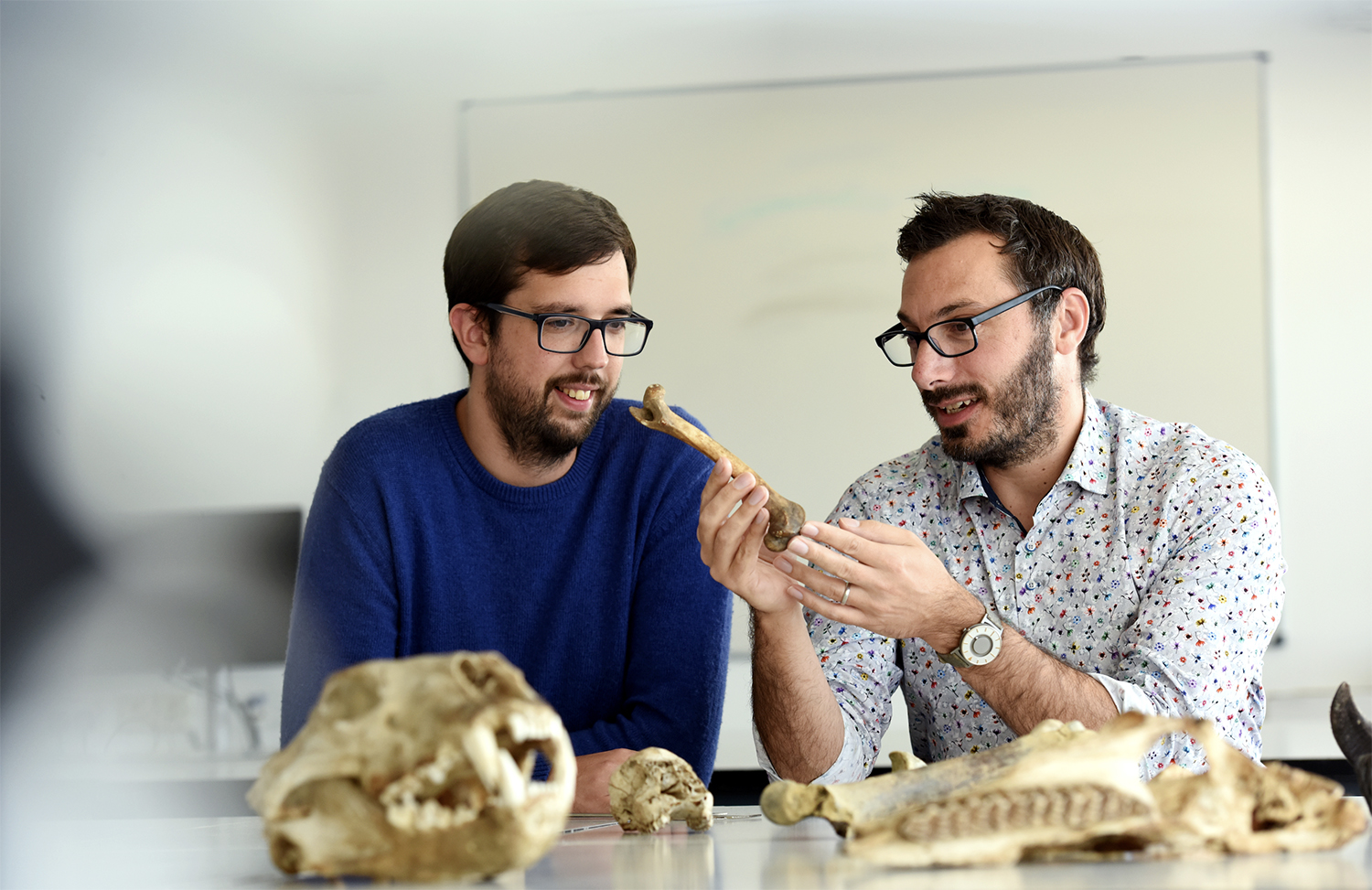
I’ve always had an interest in history, whether it was a young obsession with dinosaurs, archaeology, or recent history. I perhaps may not have understood the disciplines too well at first, but I certainly have no regrets with the path I chose – although I am still holding out for a project that involves dinosaurs.
Like many academics I speak to, my GCSEs were not great. I think there is something that changes once you get to university – perhaps the sense of responsibility, living on your own, and managing all aspects of your life that started to mature me (slightly!).
My academic life started at Bradford University. I undertook a BSc in Archaeology and in my third year a placement with Tees Archaeology I also achieved my Diploma in Professional Archaeology Studies. The course was great, but it was the forensic module that captivated me. I enjoyed it so much that I went back to Bradford University to undertake an MSc in Forensic Archaeology and Crime Scene Investigation, and then I continued with a PhD on the topic of imaging, but this time at Teesside University.
Fairly early on in my PhD studies I was sat watching TV on a Sunday evening and an email popped in from one of my supervisors, Tim Thompson. It was a generic email about upcoming projects and such, but I replied with something along the lines of, ‘Take a break, Tim’. Tim’s immediate reply is something that stuck with me:
‘Science never sleeps.’
I have often thought about this, said it on occasion, and applied it to my own work.
To me, one of the most important aspects of education is public outreach and finding ways of presenting science in a refreshing and engaging way. I am very lucky: I work in archaeology and anthropology – two extremely interesting disciplines which receive a lot of public interest. I have tried to give back to the community by providing opportunities to those who do not get a chance. I think as academics it is our responsibility to do this, and we are best placed to provide these opportunities.
Certainly if there is one thing that I have learnt, it is that the public are naturally curious. I have been lucky enough to have worked alongside a large number of passionate individuals who share the same values. We have worked with young children volunteering at the Moors and Valleys Young Archaeology Club, the general public as the outreach officer for the British Association for Biological Anthropology and Osteoarchaeology, and the older community as the Chair of Teesside Archaeology Society.
I’m sure these experiences have influenced my research in academia. One of the areas I have spent my time focussing on is the application of imaging to heritage and the forensic sciences, but in the sense of, ‘How can we make our disciplines more engaging?’ We live in an ever changing world full of technology, so we must adapt with these changes.
Although I try to focus on the best practices for scanning, the ethical considerations, and attempting to make the process in the forensic context good enough for the courts, I’ve also been able to work also on some fun and interesting projects along the way. A particular favourite research project focused on analysing the cut marks on elephant bird bones (essentially giant emus) from Madagascar. The cut marks indicated that there was human activity (they were cutting them up and eating them), but because these bones dated from around 10,000 years ago, we pushed back known occupation of people on Madagascar by about 6,000 years (previously thought to be 4,000 years ago).
I have recently moved to Cranfield Forensic Institute and I want to continue providing the public with opportunities to experience my day to day job, whilst also continuing to solve problems within the forensics field. The opportunity to continue researching at Cranfield University is certainly a huge benefit to the wider world, so I look forward to where this next chapter takes me!

Categories & Tags:
Leave a comment on this post:
You might also like…
How Cranfield shaped my journey as an Aerospace Engineer
If I'm being specific about the moment it clicked, it was reading a paper called "On the Role and Challenges of Computational Fluid Dynamics (CFD) in the Aerospace Industry" by two Boeing engineers, P. ...
Introducing Kings Norton Library
Welcome to all our new students! We are looking forward to meeting you soon. You will find Kings Norton Library in the centre of the Cranfield campus, and it is open 24/7 to all staff ...

Setting your research on the right course: Four questions every researcher should ask
Whether you are just beginning your doctoral journey or are already well into your research career, successful research rarely happens by accident. Like any successful mission, it depends on good planning, informed decisions, and getting ...

5 budgeting mistakes students make (and how to avoid them)
Good financial planning isn't about how much money you have. It's about the habits you build. We asked Dr Lakshmy Subramanian, Course Director for the Banking, Economics and Finance MSc, about the budgeting mistakes ...
Finding your reading materials
Use Library Search Library Search is the first place to start when you are trying to find academic sources for your work. This is the search box on the library website homepage. It allows you ...

Formula 1 was the dream and Cranfield was the conduit
I still remember the exact moment Formula 1 (F1) got its hooks into me. I was in my first year of an aerospace undergraduate engineering degree when I watched a video about the sport ...