


Day one of the Study Tour: Charoen Pokphand Food PCL
08/05/2018
Study Tour Blog – Charoen Pokphand Food PCL
Day one of the international study tour in Thailand got off to a stormy beginning with torrential rain and thunderstorms. The clouds soon parted and jet lag was obliterated with copious amounts of caffeine.
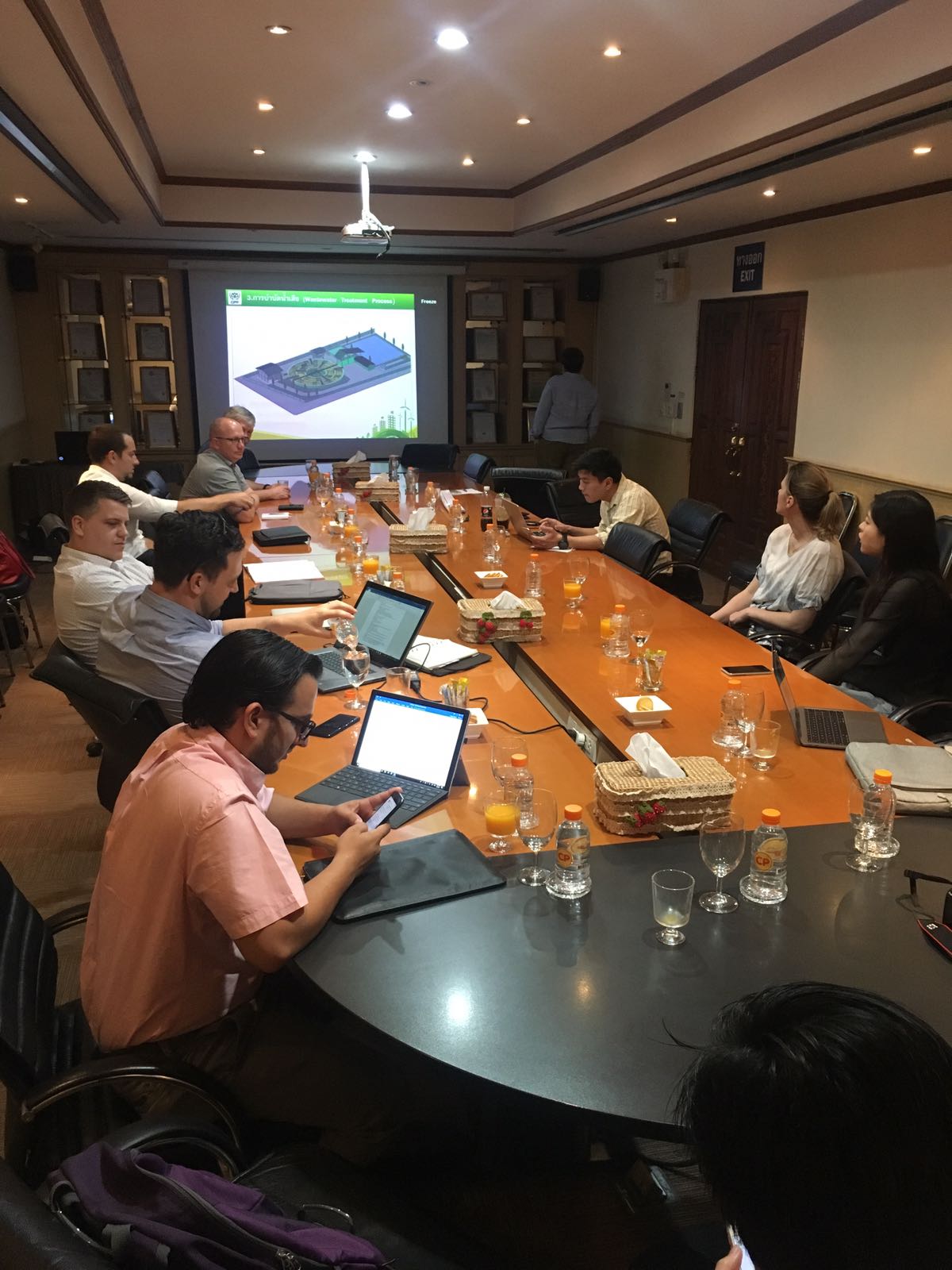
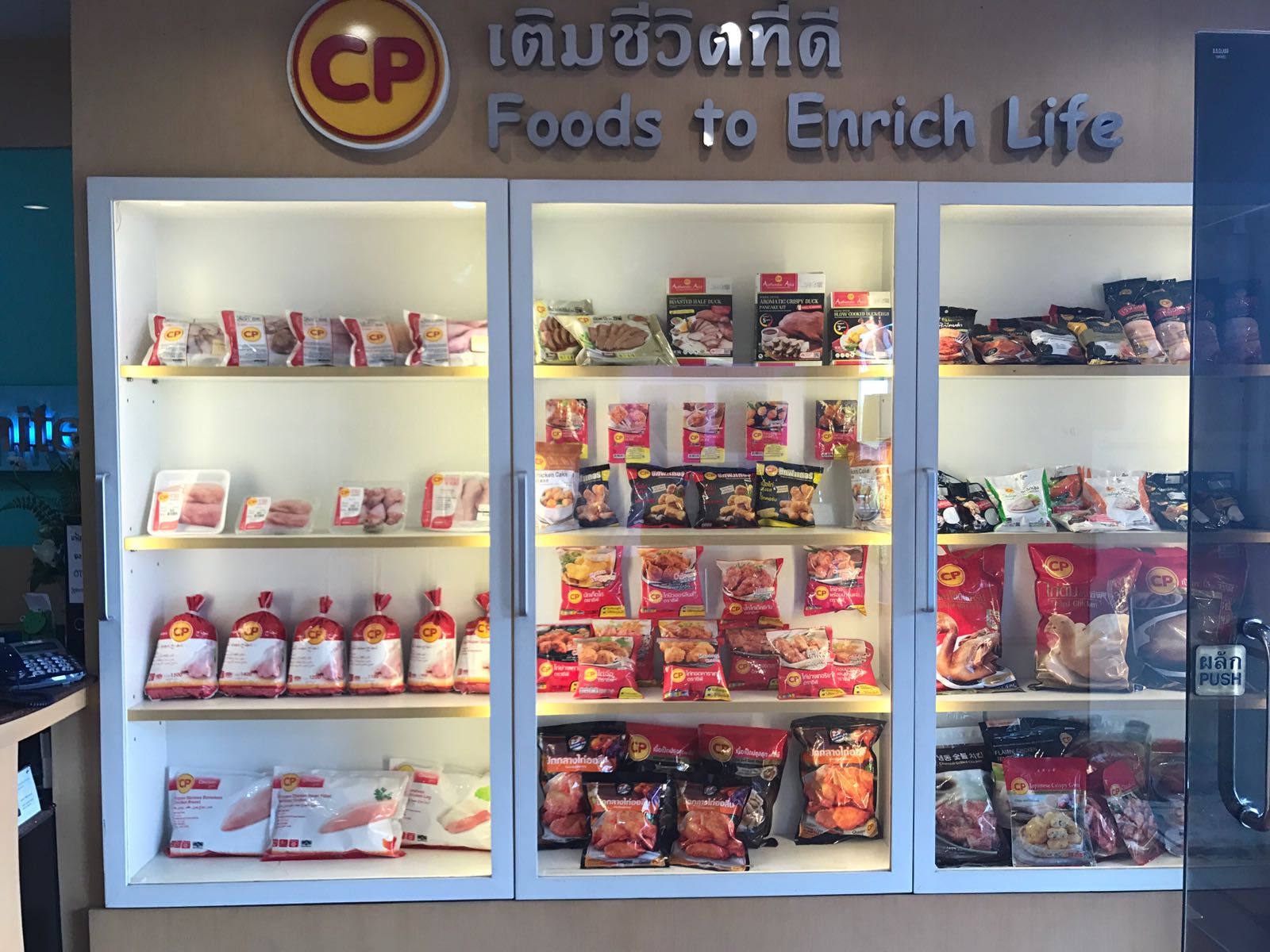
First stop of the tour was to the processing factory of Charoen Pokphand Food PCL (Public Company Limited). A leading food producer supplying chicken to markets across the world. With the largest portions of its consumer base coming from the UK and Japan and providing produce to market leading restaurants such as KFC. We were given a warm welcome by the pleasant team at the facility a short distance from Bangkok led by Aekkarat Boonnoon who is the General Manager of Business Process improvement.
After some introductions, we were delivered an informational video detailing the operations. The supply chain is fully vertically integrated stretching back to produce of feed for the broliers (chicks in farms), breeding, slaughterhouses, process manufacturing and distribution centres, the reason for the full integration of the supply chain is to ensure full quality control and safety in its products. This strategy reduces risks in the supply chain by standardising processes across the board and ensuring consistency throughout its operations.
CPF does not manage all of the breeding capacity independently so therefore sub-contract some of the farming operations to third parties. While this might seem risky from a quality perspective they ensure this by requiring third party farmers to breed the chickens according to CPF standards and using CPF feed products.
In the production facility, we visited, there were some frightening figures around the quantity throughput of livestock that left some of the group scratching their heads. After 42 days of bulking, when the chickens reach optimum weight, they enter the slaughter house where DAILY, 230,000 chickens meet their demise ready for the production line. They are then dipped into zero-degree temperature treated water to avoid bacterial growth and readied for processing. The facility offers multiple cooking methods for the chicken including grilled, steamed and roasted with chosen marinade as required by the end customer or according to CPF’s own product range. The semi-automated factory has a workforce that keep high levels of quality control by consistently checking every product per activity including metal detection for foreign particles. The whole operation is supported by an on-site water treatment facility, where the waste water is chemically treated and put through various pools and grease traps before being released into the local water stream at cleaner level than the water already in there!
Following on from the tour and presentation we were treated to some fine local cuisine of Pad Thai and what we can only assume is CPF’s own chicken! Overall a great start to the tour and an eye-opening insight to the food supply chain in Thailand.

Categories & Tags:
Leave a comment on this post:
You might also like…

Keen to develop your study skills?
Alongside the technical skills and academic knowledge that you will gain on your course, as a Cranfield student you have the opportunity to develop a range of other skills that can enhance your learning experience. ...
The V-conomy: powering the sixth wave of global economic growth
The world could be on the verge of a major surge in economic growth and development, driven by the convergence of AI and clean energy technology. Waiting to ride the K-wave The Russian ...

Need help using the Python programming language?
We know some of our students are currently trying to learn Python, so we wanted to make you aware of some great LinkedIn Learning videos that can help. But don't you have to pay for ...

What does it really take to become a Chevening Scholar?
Say “Turkmenistan” to most people and you’ll get a blank look. That was true when I left Ashgabat for the UK to study an MSc in Logistics and Supply Chain Management at Cranfield University ...

Get a head start on referencing and plagiarism
We offer a module on Referencing And Avoiding Plagiarism which you can find on your Canvas dashboard. It explains the role and importance of citing references and how to incorporate the work of other authors ...
How Cranfield shaped my journey as an Aerospace Engineer
If I'm being specific about the moment it clicked, it was reading a paper called "On the Role and Challenges of Computational Fluid Dynamics (CFD) in the Aerospace Industry" by two Boeing engineers, P. ...