


New Offshore Engineering MSc
05/04/2018
About offshore engineering
Offshore engineering is, now more than ever, a rapidly developing discipline. In addition to its traditional relevance to the oil and gas industry, since the 1950s, it is now expanding to embrace the novel engineering challenges presented by the offshore renewable energy industry.
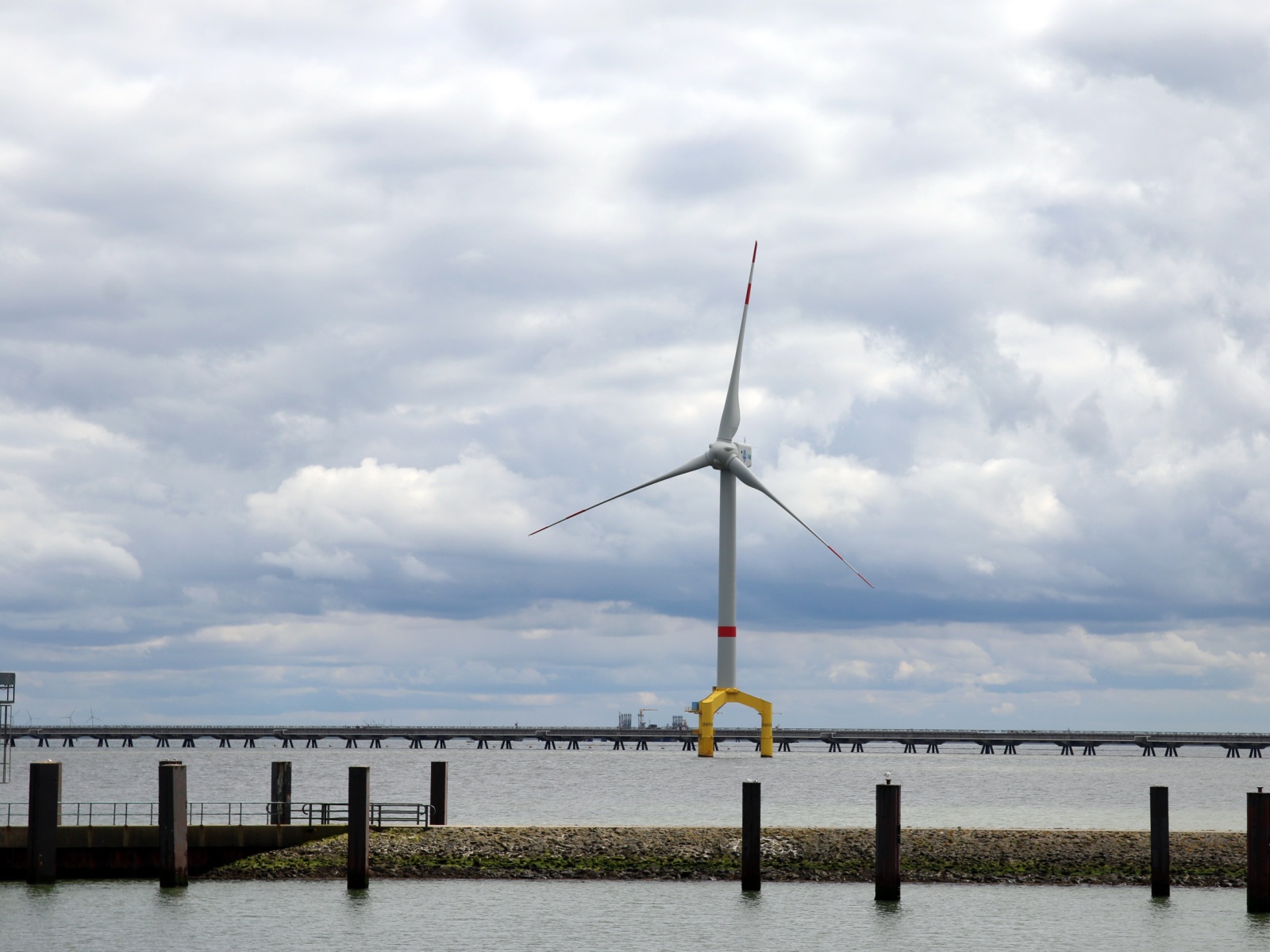
Around 1500 offshore wind turbines are already operating in the UK, for a total of 5.4GW (enough to power around 3.6 million houses), with further 3GW under construction (coming online in the next few years), and 13GW consented (will be online in the next 5-10 years). Despite being a commercially mature field and economically sustainable even without incentives, it is still a relatively young industry, with a substantial need for optimisation, and an urgent specialised skills gap to bridge.
The offshore renewable energy industry has learnt a lot from the offshore oil and gas industry, but it has also tackled novel challenges, specific of this field. In particular, the paramount need to lower the cost of the electricity produced by a wind turbine, a wave energy device, or a tidal turbine, has pushed the industrial and academic research community to analyse more in-depth old and new challenges, to find new solutions to old problems.
With the consistently low oil prices of the past years, the offshore oil and gas industry has a need to reinvent and optimise itself – and it is now driven, like never before, by lowering the costs of oil production.
Strangely enough, the two sectors are now tackling very similar challenges, and a mutually beneficial synergy can be established. This is how the Offshore Engineering MSc at Cranfield University was born – by developing a state-of-the-art, up-to-date new MSc exploiting Cranfield University’s strong track record in offshore renewable energy and oil and gas projects.
Why study our Offshore Engineering MSc?
Cranfield’s Offshore Engineering MSc provides students with the new skills needed across this fast-developing sector, together with the fundamental engineering knowledge necessary, whatever the application.
The MSc starts with a number of modules focusing on the offshore engineering fundamentals, such as ‘Materials and Corrosion in the Offshore Environment’, ‘Risk, Reliability and Inspection Offshore’, and ‘Engineering Stress Analysis’, ‘Structural Integrity’, and ‘Dynamics of Offshore Structures’. Then, it is complemented by a number of modules focusing on more recent, fast-developing disciplines such as ‘Advanced Maintenance of Offshore Assets’, where the latest techniques in monitoring and inspection are explained, or ‘Health, Safety, Security and Environment’, where the engineering students can gain a holistic, more comprehensive overview of the multidisciplinary aspects of large offshore projects, as well as ‘Reliability Engineering and Asset Risk Management’, looking in depth at the Management aspects of these large projects.
Similar to the other Energy and Power MScs, these taught modules are complemented by a group-based research project which requires team work to develop problem definition, hypothesis setting, analysis and problem-solving skills to address challenges faced by professionals. This module is typically delivered through collaboration with an industrial sponsor, and is designed to integrate knowledge, understanding and skills from the taught modules in a real-life situation.
The Offshore Engineering MSc teaching staff are proud and excited to provide this state-of-the-art, much needed by industry MSc, and are looking forward to working with all of you.
>>Find out more about this course, as well as others, by clicking here <<

Categories & Tags:
Leave a comment on this post:
You might also like…

5 budgeting mistakes students make (and how to avoid them)
Good financial planning isn't about how much money you have. It's about the habits you build. We asked Dr Lakshmy Subramanian, Course Director for the Banking, Economics and Finance MSc, about the budgeting mistakes ...

Finding your reading materials
Use Library Search Library Search is the first place to start when you are trying to find academic sources for your work. This is the search box on the library website homepage. It allows you ...

Formula 1 was the dream and Cranfield was the conduit
I still remember the exact moment Formula 1 (F1) got its hooks into me. I was in my first year of an aerospace undergraduate engineering degree when I watched a video about the sport ...

Introducing Barrington Library
Welcome to all our new students! Barrington Library supports all the students and staff at Cranfield Defence and Security on the Shrivenham site. We are looking forward to meeting you all soon, in person or ...

About to start your journey at Cranfield? We’re here to help!
Congratulations on accepting your offer to study at Cranfield! If you’re keen to get a head start before your course begins, our Library Services team is here to support you every step of the way. ...

Bank holiday hours for Library Services: Monday 31 August
Library Services staff will be taking a break on Monday 31 August for the bank holiday. You will still be able to access all the resources and help you need via our library website. The 24/7 ...