

‘Turn This Ship Around’ and acting your way to new thinking, or ‘fake it till you make it’! (Part one of four)
12/03/2018
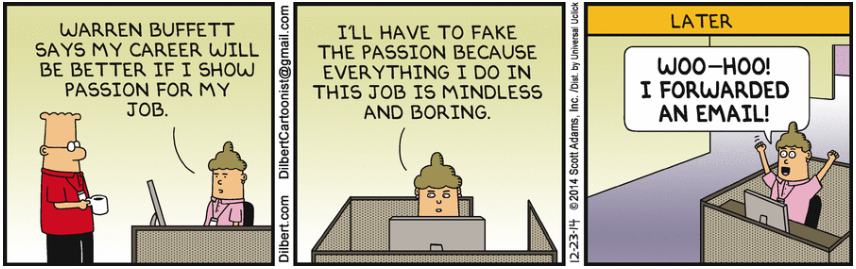
David Marquet tells us about the time he was rapidly running out of time and needed to raise morale quickly. He had two choices, “Change your own thinking and hope this leads to new behaviour, or change your behaviour and hope this leads to new thinking” – he chose the latter. In a past life I’ve observed that the latter approach (what I refer to as “fake it till you make it” or FITYMI) works over the short-term, but you better have a longer term plan to underpin and substantiate the change in behaviour, otherwise people will revert to type under pressure.
Over the past few weeks we’ve been blogging about “Mission Command” and “Centralised Intent” – and we’ve seen some organisations in the early stages of attempting this. There will be some FITYMIs in the crowd, and we wanted to make sure there is some substance which people can fall back on when they need it.
So, as promised, here’s an overview of the method we work through in helping organisations implement Mission Command.

The approach is based on work by Arnoud Franken, Stephen Bungay and others. An easy and interesting read can be found here: https://hbr.org/2010/11/web-exclusive-how-the-uks-royal-marines-plan-in-the-face-of-uncertainty
We’ll explore this approach in more detail over the next few weeks, but the common mistakes we see are:
1. Jumping to conclusions (one of some executive management’s favourite sports), and attempting to work through Stage 5 without properly working through Stages 1 – 4
2. Some executive management believing they have to have and supply the answers and thus trying to work through Stages 1 – 7, rather than stopping at Stage 3 and handing over to the next management level down to take the strategic intent out into the field.
3. Many not knowing what Measurements (Stage 7) to put in place to know if execution of strategy is actually working.
More anon….

Categories & Tags:
Leave a comment on this post:
You might also like…

Setting your research on the right course: Four questions every researcher should ask
Whether you are just beginning your doctoral journey or are already well into your research career, successful research rarely happens by accident. Like any successful mission, it depends on good planning, informed decisions, and getting ...

5 budgeting mistakes students make (and how to avoid them)
Good financial planning isn't about how much money you have. It's about the habits you build. We asked Dr Lakshmy Subramanian, Course Director for the Banking, Economics and Finance MSc, about the budgeting mistakes ...

Finding your reading materials
Use Library Search Library Search is the first place to start when you are trying to find academic sources for your work. This is the search box on the library website homepage. It allows you ...

Formula 1 was the dream and Cranfield was the conduit
I still remember the exact moment Formula 1 (F1) got its hooks into me. I was in my first year of an aerospace undergraduate engineering degree when I watched a video about the sport ...

Introducing Barrington Library
Welcome to all our new students! Barrington Library supports all the students and staff at Cranfield Defence and Security on the Shrivenham site. We are looking forward to meeting you all soon, in person or ...

About to start your journey at Cranfield? We’re here to help!
Congratulations on accepting your offer to study at Cranfield! If you’re keen to get a head start before your course begins, our Library Services team is here to support you every step of the way. ...