


The Future of Operational Performance Management – Part 5/5
17/03/2017

“We’ve only held up 3 banks this month”, says Bonnie, “Clyde, our target this month was 5 – get your a**e into gear and hit another 2 before the 31st !”. “You’ve used the ‘Tube’ 3 more times than average this week!”. “I’ve only visited my GP once this year – better get sick again!”
Do criminals really think in terms of months? Do customers really look at their use of transport weekly? Do patients measure their use of services annually? In my experience, the answer is “No” to all of these questions – the world operates 24*365 (and even this constrains our thinking to hours and years!) So why do we measure, say, the volume of crimes per month? Why measure the health of the Underground Network by “Rail Period” (approx. every 4 weeks)? Over the past few weeks, we’ve been looking at what we can learn from 500+ years of Financial Performance Management (where typically they review results monthly or annually) and selectively use to good effect in more rapidly evolving 50+ years of Operational Performance Management.
Over the past few weeks we’ve been comparing Financial Performance Management (over 500+ years) with Operational Performance Management (over 50+ years), and looking for the equivalent approach/technique/information in Financial Performance that can/cannot be usefully adopted for Operational Performance Management.
We posed 3 questions about approach/technique/information:
- Would it contain just a standard set of measures?
- Would it be presented in a standard way?
- Would it be presented on a monthly basis?
The first of 2 of these questions have been answered in previous posts, where we introduced 4 Generic Process Types (the Operational Performance Management equivalent of basic tools such as Profit & Loss Sheet, Balance Sheet etc. in Financial Performance Management), we introduced a standard set of, at most, 10 critical measures required for improving Operational Performance (equivalent to Revenue, Costs, Profit, etc. in Financial Performance Management), and visualised in a standard way using Extended-SPC (with the equivalent of tables of results for this month vs last month / budget / plan etc. in Financial Performance Management). This post will address the final question.
First, a little qualified and respected academic input: “Making Work Systems Better: A Practitioner’s Reflections”, by Luke Hoebeke, 1994. I’ll change his wording to make it more easily consumable for the layman. Most Systems (meaning as in Systems-Thinking, not as in the Incident Management System, Payroll System etc.) work in different ways in different timescales.
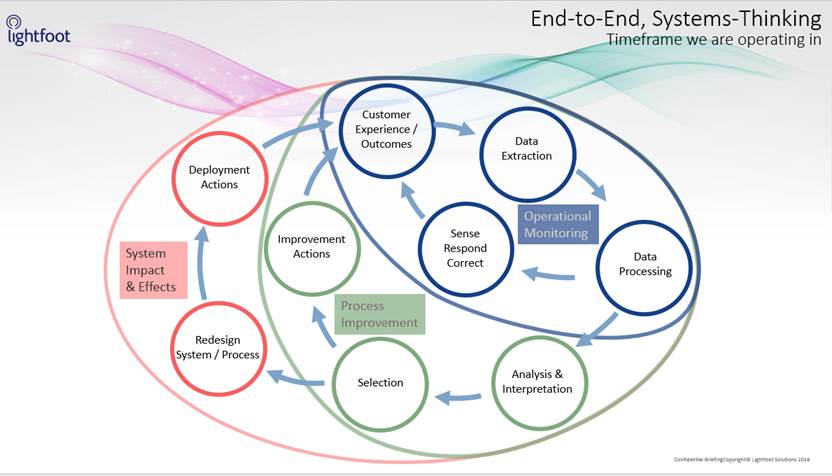
Hoebeke introduces more levels, but some may say they are too abstract for most people / situations. Let’s consider the most obvious – 3 levels, namely the Operational Level, Process Improvement Level, Systems Impact Level.:
- Operational Level: Often referred to as Sense & Respond or Implicit Guidance & Control (John Boyd and the OODA Loop). Here the timeframe for events happening is in the seconds / minutes / hours / days depending on the System. Typically, infrastructure assets (e.g. trains or lifts) can change significantly within several seconds or minutes, in a Contact Centre, things can change significantly within a 15-minute period, and certainly hour by hour. Anti-social behaviour can depend on hour of day and day of week. Not much point in looking at these on a monthly basis if we need to “Sense and Respond”.
- Process Improvement Level: Often, the Police implement Initiatives to combat some form of predictable criminal behaviour. An example may be to reduce burglary in student accommodation at the start of each academic year. This may entail looking at the impact on a daily, weekly and monthly basis. We have to give the Initiative a certain amount of time to take effect and exhibit that effect in the burglary results. See example below.
- System Impact Level: This is where seismic changes can substantially rock the System – e.g. the 2011 earthquake in Christchurch New Zealand and its impact on the Healthcare System; Fundamental changes in rules introduced by Her Majesty’s Inspectorate of Constabulary or by the Home Office; Disruptive technology (e.g. internet) being introduced into the Retail Industry, etc. These changes are longer-term changes that may span quarter-years, years or longer. Not much point in looking at these on a monthly basis.
Example of Process Improvement: Initiative to reduce Burglary in a Dwelling in areas with a high population of students: Measurement Frequency (looking for improvement monthly, weekly and daily):
Monthly Perspective:

Weekly Perspective:

Daily Perspective:

Currently, the imposed regular monthly performance review meeting is a hang-over from Financial Performance Management, is looking backwards at what happened, and may have a use in informing stakeholders of the “State of the Nation”. It is Reporting in its most classic of meanings. It has nothing to do with Performance Improvement, and should be considered as something quite separate. Monthly Reporting is definitely one thing we should not be adopting from Financial Performance Management into Operational Performance Management!
So, in answer to the 3 questions above:
- Would it contain just a standard set of measures? Yes
- Would it be presented in a standard way? Yes
- Would it be presented on a monthly basis? No

Categories & Tags:
Leave a comment on this post:
You might also like…
Building more than research: Reflections from the ECRn Symposium 2026
There’s something quietly powerful about a room full of early career researchers. Not just the ideas, although there were plenty of those—but the conversations, the curiosity, and the sense that everyone is figuring things ...

Library services over Easter, 3-6 April
Kings Norton Library will remain open for study 24/7. You will need your University ID card to enter the building and can use the self-service machines to borrow and return items as usual. Barrington Library ...

How do I access the full-text of Harvard Business Review (HBR)?
This is a frequently asked question, and it's worth knowing how to access this key management journal. So, how do you access HBR in full-text? The short answer is via our eJournals finder. You can find ...
Engineering problem to solve? Let Knovel help you find a solution
Did you know that Knovel provides you with more than just eBooks? Knovel is a key database for many engineering, mechanical and materials courses here at Cranfield University, and contains content from an extensive range ...

What happens when female scholars meet influential leaders?
On the 5 March 2026, our British Council Women in STEM Scholars had the privilege of sitting down with two excellent role models of industry and academia: Professor Dame Karen Holford, ...
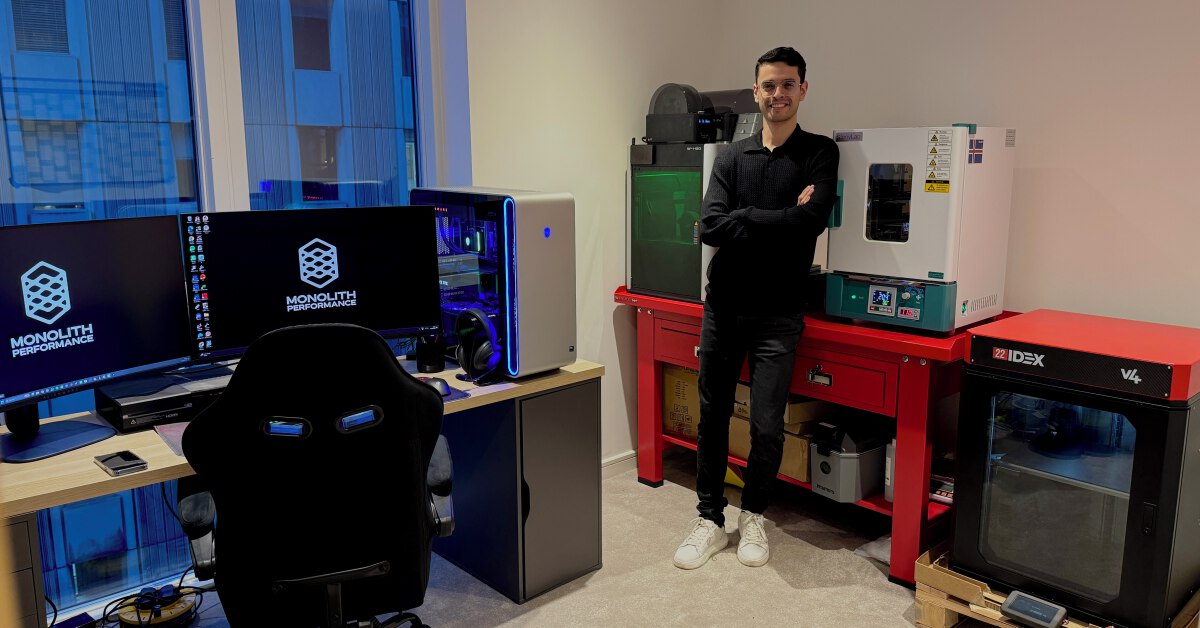
From MSc to CEO: Igniting a research revolution
For many, a master’s degree is achieving a big milestone. Kilyan Ocampo, Computational Fluid Dynamics alumni shares how studying at Cranfield helped launch his career in the energy sector. Today, Kilyan ...
Most organisations fire fight! Ideally the first level of response is “sense and respond” but organisations do need to go further than that. The process improvement loop is the next step up, but we shouldn’t do this without considering the system wide impacts as best we can. I make that last point as it isn’t always possible to anticipate all the system wide impacts, so we need to be vigilant at this level too.
The end to end system thinking picture above is an important and useful reminder of how we need to view the world and manage our approach to get real value out of performance measurement and management.