

What are Psychometric Assessments?
19/10/2020

Do you have a dream company in mind? Both small and large organisations will require you to complete psychometric assessments – also known as Online Job Assessments – as part of their application process. These vary from ‘traditional’ to ‘modern’ styles of assessment, such as Game-Based Assessments (now used by 10% of employers) and Video Interviews.
Online Job Assessments have become a staple for employers when recruiting, and the amount of preparation required by candidates has also increased. It is now essential more than ever to become familiar with the types of assessments you may be faced with. Consider the recent study (Bradley et al, 2019) which found that Times Top 100 applicants who do not practice assessments tend to fail at the first hurdle (54%-84%). As when practicing any sport or skill, you could say ‘practice makes perfect’.
That’s why Cranfield University have partnered with GF, Job Assessment Experts who provide all students and alumni with FREE practice Online Assessments.
Simply register with your Cranfield email address and gain access to:
- Practice over 37 full aptitude tests, understand how you compare with other test takers, go through worked solutions and improve your Numerical, Verbal and Logical Reasoning
- Understand the Behavioural Competencies you possess and those you need to develop with 2 Situational Judgement Tests (SJT)
- Gain insights into the personality traits that top employers want in applicants with a Personality Questionnaire
- Become familiar with the increasingly common Game-Based Assessments
- Share and review your recorded Interview responses to 12 AI powered Competency, Strength, and Industry-Specific Video Interviews to improve your interview techniques.
Top 3 Tips
- Quality Over Quantity
- Practice fewer tests, but do these in depth. Go through each question and solution, rather than trying to do as many tests in a short space of time.
- For example, if you are practicing Numerical Reasoning, try focusing only on 3 tests until you are comfortable with the style of question.
- This allows you to identify and improve specific areas and, in turn, will give you more confidence with this assessment type in the future.
- Use Reports Effectively
- After you have completed a test, visit your reports page to identify where you excelled, and where you struggled.
- For example, once you have completed Numerical, Verbal, or Logical Reasoning Tests, look at the solutions as well as the topics that the report suggests you need to focus on.
- All GF tests provide clear solutions to questions where necessary to help you understand how employers score real Job Assessments.
- Learn About Yourself
- Use GF Assessments to identify the skills and competencies you need for the role you are applying for, and those that you already possess.
- For example, you can use the Personality Questionnaire to identify the traits employers are looking for, and whether you possess these.
- Or use Video Interviews or Situational Judgment tests to discover the behavioural competencies employers commonly seek in applicants.
Written by Peter Thornton MA, and Abdul Wahaab MSc MBPsS from GF, Job Assessment Experts
Edited by Alexis Drake, Marketing and Communications Manager, Cranfield Career Development Service

Categories & Tags:
Leave a comment on this post:
You might also like…

From national service to Environmental Engineering: My journey to Cranfield
Postgraduate study is often a defining step in shaping one’s academic and professional direction. For me, pursuing an MSc in Environmental Engineering at Cranfield University has been both a personal and professional adventure—one that ...

From limited experience to a UK marketing career
Top tips for postgraduate marketing students by Elnaz Dashchi, Strategic Marketing MSc alumni Coming into the postgraduate Strategic Marketing MSc, I did not have a lot of professional experience - and that made me ...

My journey to Cranfield as an FIA Motorsport Engineering Scholar
"You don’t need to fit a stereotype to succeed in engineering or motorsport. You need curiosity. Resilience. And the confidence to take up space." In this blog, Sanya Jain, current MSc student and FIA ...

‘Getting started with Bloomberg’ training – discover the power of Bloomberg terminals
Perhaps you've heard people talking about Bloomberg or heard it mentioned in the news and are wondering what all the fuss is about? Why not come along and find out at our Getting started with ...
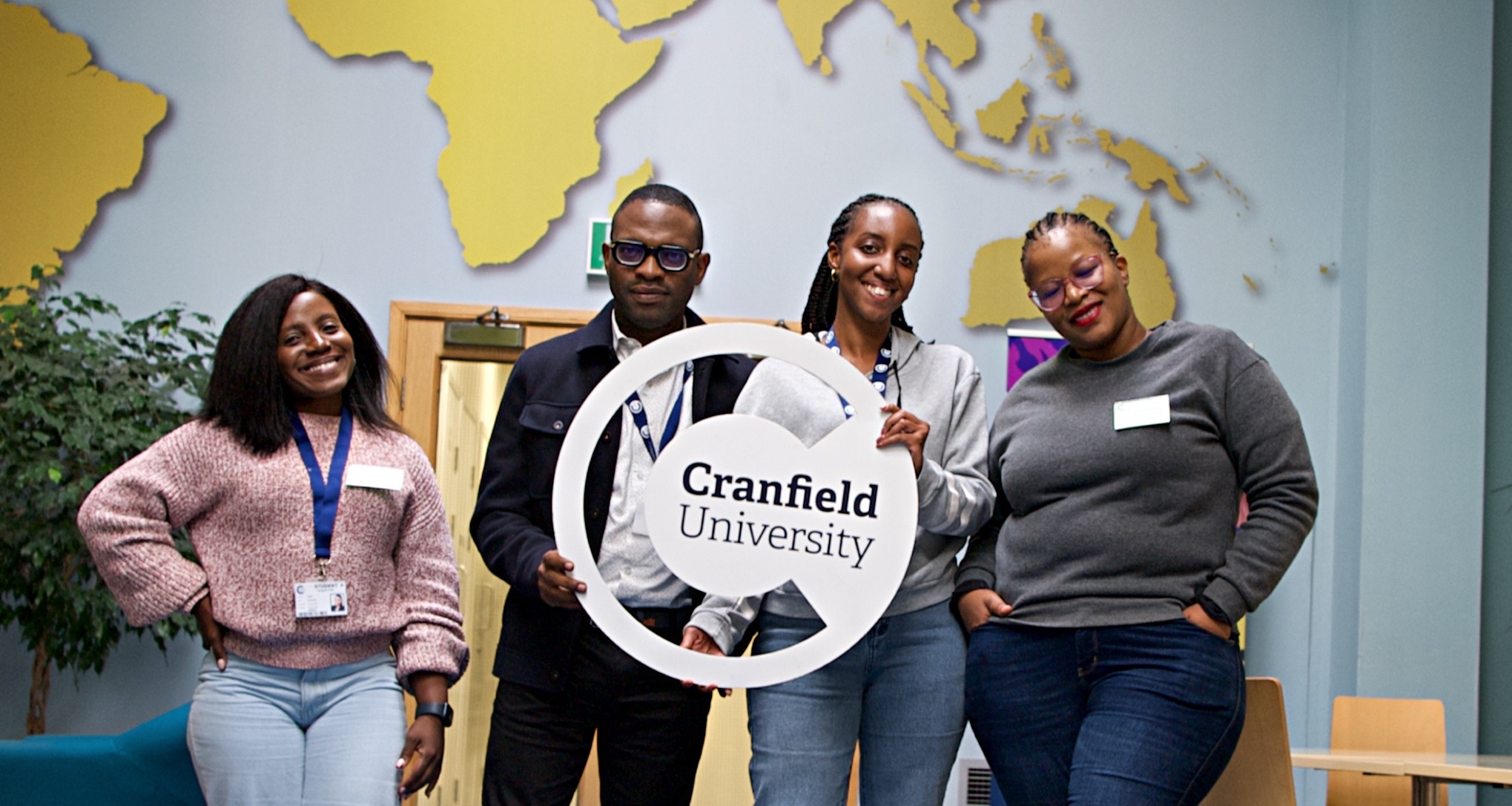
Commonwealth Scholarships play a critical role in developing sustainability and leadership in Africa
Q&A with Evah Mosetlhane, Sustainability MSc, Commonwealth Distance Learning Scholar What inspired you to pursue the Sustainability MSc at Cranfield? I was inspired to pursue the Sustainability MSc at Cranfield because of the university’s ...

How do I reference a thesis… in the NLM style?
You may be including theses within your research. When you do so you need to treat them in the same way as content taken from any other source, by providing both a citation and a ...