

Catching up with Dr Abdou Khouakhi
31/01/2021
Recently we caught up with Dr Abdou Khouakhi, Lecturer in Remote Sensing, to discuss a thesis project he supervised this year. We spoke about the aims and findings of the project and the benefits of students working in collaboration with industry.
What were the aims and objectives of the thesis project?
The main aim of the Thesis project was to work with the Kent Wildlife Trust (KWT), a conservation charity in England, to develop landscape-scale remote sensing approaches for conservation. Monitoring KWT landscape scale conservation is resource intensive with traditional methods, and cost-to-scale effective solutions were needed.
One of the objectives was to investigate which free and low-cost remote sensing data is suitable for landscape-scale monitoring and to make recommendations to KWT in terms of data suitability, use and findings.
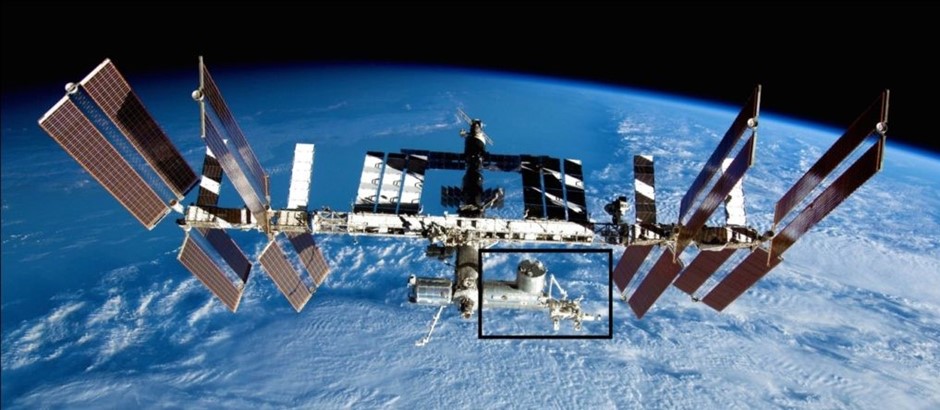
As a case study the student examined the application of the recently published NASA’s Global Ecosystem Dynamics Investigation (GEDI) waveform LiDAR datasets for KWT conservation monitoring. The GEDI sensor is mounted on the International Space Station, providing high resolution and unique datasets on the height, density, length and width of the biomass.
The project was supervised by Dr Daniel Simms and Dr Abdou Khouakhi
The research topic was proposed following the need of Kent Wildlife Trust to optimise its conservation efforts at landscape-scales. KWT provided datasets such as GIS data of KWT Nature Reserves, Living Landscape Areas, Roadside Nature Reserves, Local Wildlife Sites, and Biodiversity Opportunity Areas in addition to Kent Habitat Survey data.
What are the benefits of the thesis projects in collaboration with industry for both the company and the students?
The collaboration with KWT allowed the student to conduct research on a real world problem. The student also develops communication skills by interacting with KWT and responding to their needs.
I think the experience allowed the student to understand the work and challenges that conservation charities such as KWT are undertaking. It also provided an original case study to include in their CV.
The collaboration allowed KWT to access Cranfield’s expertise and resources to solve their problem by working with a dedicated student and a supervisory team on the work. The student had about three months to work on a specific project, allowing more in-depth analyses, which benefited KWT.
How do supervisors support students with their work to complete their thesis project?
Two supervisors were made available to the student and at least one hour per week of direct contact to discuss progress, answer questions and ensure that the student was on track.
What outcomes did the student come to at the end of their thesis project?
- The student provided an exhaustive list of free and low cost satellite products suitable for landscape-scale monitoring of KWT conservation
- Results showed that GEDI derived vertical profile was consistent with dense woodland structure
- A weak relationship was found between GEDI and Sentinel-2 NDVI with a slightly improved association when using high resolution Planet imagery
- GEDI derived metrics can be extrapolated across the KWT woodland areas

Categories & Tags:
Leave a comment on this post:
You might also like…

Moving to the UK to study? How to plan for banking, exchange rates and transfers
Currency and banking are two of the most practical parts of financial planning for international students. They are also often the most overlooked. We asked Dr Lakshmy Subramanian, Course Director for Cranfield University's Banking, ...
Cranfield: an environment where innovation thrives
The latest Knowledge Exchange Framework rankings from UK Research and Innovation (UKRI) gives an insight into the real and meaningful impact that UK universities have. The seven categories that make up KEF6 cover everything ...
How Cranfield accelerated my career in Logistics and Supply Chain Management
After graduating from the MSc in Logistics and Supply Chain Management at Cranfield University, I've been reflecting on the experiences that made my journey so valuable and the impact it has had on my ...

Mendeley: a powerful tool to organise and manage your references
Are you looking for a way to manage your references, create in-text citations and reference lists for your assignments or thesis? If so, you may wish to consider using Mendeley. What is it? Mendeley is ...
Keen to develop your study skills?
Alongside the technical skills and academic knowledge that you will gain on your course, as a Cranfield student you have the opportunity to develop a range of other skills that can enhance your learning experience. ...
The V-conomy: powering the sixth wave of global economic growth
The world could be on the verge of a major surge in economic growth and development, driven by the convergence of AI and clean energy technology. Waiting to ride the K-wave The Russian ...